
Chaurasia Marriage Traditions
19 October, 2026
In the Chaurasia community, marriage is celebrated as more than a union between two individuals. It's treated as a sacred alliance between two families. Chaurasia marriage traditions draw on Vedic customs and regional heritage from across northern, eastern, and central India, including Uttar Pradesh, Bihar, Madhya Pradesh, West Bengal, and Maharashtra, and they blend spiritual solemnity with lively festive celebration.
Families today adapt these ceremonies to fit modern schedules and cross-city logistics. Even so, the core rituals remain intact, and they still express cultural identity, family blessing, and lifelong commitment. Understanding what each tradition means helps couples and their families appreciate the depth behind these rites, rather than treating them as items on a checklist. This pairing of ceremony with formal matchmaking documentation is well established across the subcontinent; as broader accounts of arranged marriage in the Indian subcontinent note, families customarily exchange photographs alongside supporting documentation such as astrological charts or a biodata before the rituals themselves begin.
Key Takeaways
- Chaurasia weddings follow three broad phases: pre-wedding rituals (Roka, Tilak, Haldi, Mehendi), the main wedding day (Jaimala, Kanyadaan, Saat Phere, Sindoor Daan), and post-wedding rituals (Vidaai, Griha Pravesh).
- Core Vedic rites like Saat Phere and Kanyadaan stay consistent everywhere; folk customs like Matkor and Dwar Chhekai vary by region.
- Many urban families now condense four to five days of traditional festivities into a two-to-three-day schedule without dropping the rituals considered essential.
- Kundali matching isn't legally required, but it still carries strong weight for many traditional families before marriage talks move forward.
1. Pre-Wedding Rituals: Laying the Foundation
Pre-wedding ceremonies begin days or weeks before the wedding itself. They give both extended families a chance to bond and help prepare the bride and groom for the life ahead of them.
The sequence generally runs: Roka and Tilak (formal consent and family blessings), followed by Matkor or Mandap preparations (invoking the earth and erecting the canopy), and Haldi and Mehendi (auspicious herbal beautification) closer to the wedding day.
- Roka & Sagai (Engagement): The formal agreement, where both families exchange gifts, sweets, and dry fruits to confirm the alliance.
- Tilak / Godh Bharai Ceremony: Elders from the bride's family visit the groom's home to apply a sacred vermilion mark (tilak) and offer formal tokens of respect. The groom's family blesses the bride in turn during the Godh Bharai.
- Matkor (Clay Ceremony): A cherished folk tradition in many families of eastern UP and Bihar, including many Chaurasia families. Female relatives gather to bring fertile soil from a sacred site or a local field, which is then used to prepare the wedding stove or mandap base, all accompanied by traditional folk songs (Mangal Geet).
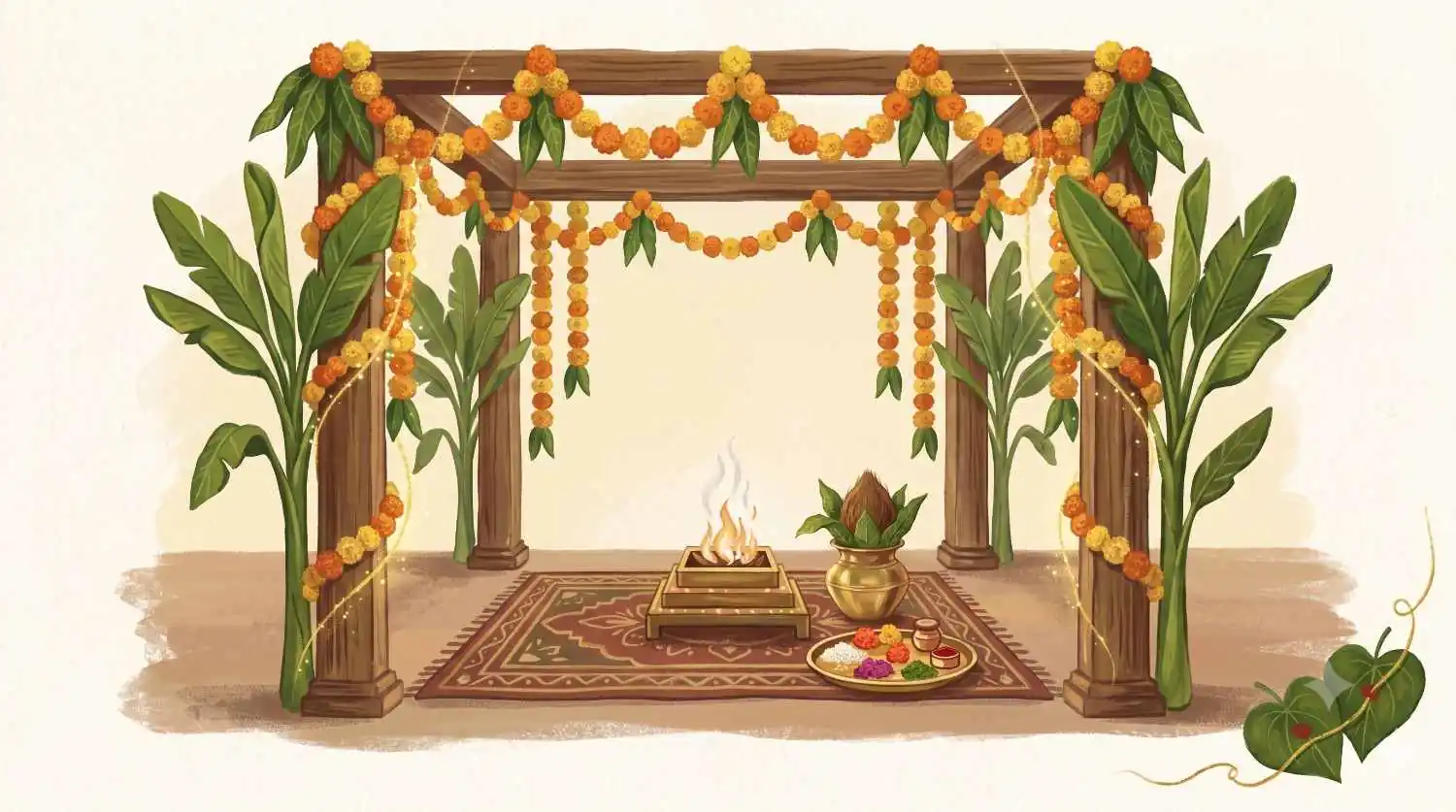
- Mandap Chhadan: Setting up the sacred wedding canopy with bamboo poles, mango leaves, and banana stems, symbolizing fertility, shelter, and natural harmony.
- Haldi (Ubtan / Manjha): A paste of turmeric, sandalwood, mustard oil, and rose water is applied to the bride and groom at their respective homes. It cleanses, purifies, and gives an auspicious bridal glow.
- Mehendi & Sangeet: An evening of music, dance, and intricate henna application, celebrating the joy and prosperity ahead.
2. The Wedding Day Ceremonies
The main wedding day centers on sacred Vedic rites performed around the holy fire (Agni), invoking blessings for longevity, prosperity, and mutual fidelity.
| Wedding Ceremony | Core Ritual Actions | Spiritual & Cultural Significance |
|---|---|---|
| Baraat Aagman & Dwar Puja | Arrival of the groom's procession at the venue; formal reception by the bride's parents. | Welcomes the groom with respect, warding off negativity before entering the sacred pavilion. |
| Jaimala (Varmala) | Exchange of floral garlands between the bride and groom on the stage. | Signifies mutual acceptance and voluntary consent to become life partners. |
| Kanyadaan | The bride's parents place her hand in the groom's hand amidst Vedic chants. | Entrusting the daughter to the groom as a sacred duty, asking for mutual respect and care. |
| Panigrahana & Gathbandhan | The groom holds the bride's hand; their scarves are tied in a sacred knot. | Uniting their individual destinies, responsibilities, and emotional lives. |
| Saat Phere (Saptapadi) | Seven circumambulations around the sacred fire while reciting seven sacred vows. | Seals the marriage through seven foundational promises of nourishment, strength, and love. |
| Sindoor Daan & Mangalsutra | The groom applies vermilion (sindoor) to the bride's parting and ties the sacred necklace. | The ultimate traditional mark of marital status (Suhaag) and lifelong devotion. |
3. Post-Wedding Rituals: Welcoming the New Member
After the wedding ceremony, post-wedding traditions help the bride settle into her new household with warmth rather than as a stranger.
- Vidaai: An emotional farewell where the bride leaves her maternal home, tossing handfuls of rice or puffed grain over her head. This symbolically repays her debt to her parents and showers blessings of prosperity on her birth family.
- Dwar Chhekai: A playful folk custom where the groom's sisters or cousins block the entrance of the house, demanding gifts or sweet promises before letting the newlyweds in.
- Griha Pravesh (Vadhu Pravesh): The bride's formal entry into her marital home. She gently pushes a small vessel filled with rice with her right foot across the threshold, then steps into a tray of red vermilion water (Aalta) to leave auspicious footprints symbolizing Goddess Lakshmi's entry.
- Mooh Dikhai & Family Reception: Extended family, neighbors, and community friends gather to greet the bride, offer gifts, and formally welcome the newly married couple into the community.
4. Regional Variations and Modern Celebrations
Core Vedic rites like the Saat Phere and Kanyadaan stay the same everywhere, but specific customs vary by region:
- Eastern Uttar Pradesh & Bihar traditions: Strong emphasis on folk rituals like Matkor and Bhatwan, traditional wedding songs (Mangal Geet and Vivah Geet), and community feasts built around regional cuisine.
- Central & Western India: Regional touches such as specific Pithi timings, distinct floral decorations, and community hall gatherings.
- Modern hybrid celebrations: Many contemporary couples compress events into a single weekend, booking one coordinated venue while still keeping the core family rituals intact.
If your family is planning a shorter, modern-style wedding and needs to decide what to trim, a useful rule of thumb is this: keep the rituals with the deepest spiritual weight — Kanyadaan, Saat Phere, and Sindoor Daan — non-negotiable, and treat the timing or scale of folk customs like Mehendi, Sangeet, and Dwar Chhekai as the flexible part of the schedule.
5. Integrating Traditions with Digital Matchmaking
Modern matrimonial technology is meant to support traditional values, not replace them:
- Preserving gotra and cultural lineage: Community profiles let families list ancestral roots, native districts, and cultural preferences upfront, before any conversation starts.
- Astrological coordination: Uploading horoscopes and checking Kundali alignment online removes the logistical delay that used to precede traditional family meetings.
- Wedding planning support: Many platforms also offer wedding planner directories, vendor categories, and event management tools, helping families coordinate venues, photography, and catering without juggling a dozen separate contacts.
Frequently Asked Questions
What is the significance of the Matkor ritual in Chaurasia weddings?
Matkor is a traditional soil-digging ceremony led by women of the family. The earth collected is used to prepare the sacred hearth or mandap foundation, symbolizing fertility, connection to Mother Earth, and family prosperity.
Are horoscope matching and Kundali Milan mandatory for Chaurasia marriages?
Not legally, no. But many traditional families still place strong importance on Kundali Milan and astrological compatibility before finalizing marriage discussions.
How many days do traditional Chaurasia wedding festivities last?
Traditionally, ceremonies could stretch across four to five days. In cities today, families often condense the same festivities into a two-to-three-day schedule covering Haldi, Mehendi, Sangeet, the wedding, and the reception.
How do families verify ancestral roots during modern matchmaking?
Matrimonial profiles include dedicated sections for native place, ancestral district, and family background. This lets families confirm cultural alignment before any direct meeting takes place.
Keeping Chaurasia Traditions Alive in Your Partner Search
Chaurasia marriage traditions reflect a deep commitment to family harmony, mutual respect, and cultural continuity. Embracing these sacred ceremonies while using modern matchmaking tools lets families preserve cherished customs while still connecting with compatible, educated partners across cities.
BabuBabuni was built to respect this process. Families can note native district and horoscope preferences on the profile, talk family to family once both sides show interest, and review Kundali under the elders' guidance at their own pace.
Register free, or explore Chaurasia profiles first.
Create Your Chaurasia Matrimonial Profile Explore Chaurasia Matrimonial Profiles